
How to Drive a Car: A Complete Beginner’s Guide
Learning how to drive a car is an essential life skill that offers independence, convenience, and
confidence. Whether you’re a complete beginner or someone looking to refine your driving
basics, understanding the fundamentals is key to becoming a safe and responsible driver.In this guide, we’ll walk you through everything you need to know—from understanding the controls to
driving on the road with confidence.
How to Drive a Car: A Complete Beginner’s Guid
1. Understanding the Basics of a Car
Before you start driving, it’s important to familiarize yourself with the basic components of a car.
Every vehicle has essential controls that you must understand:Steering Wheel – Used to control the direction of the car.
Accelerator (Gas Pedal) – Increases speed.
Brake Pedal – Slows down or stops the car.
Clutch (in manual cars) – Helps in changing gears.
Gear Shift – Used to change speed levels (manual or automatic).
Mirrors (rear-view & side mirrors) – Help you see traffic behind and beside you.
Knowing these parts builds your confidence and ensures you’re not overwhelmed when youstart driving.
2. Manual vs Automatic Cars
Before learning how to drive, you should know the difference between manual and automatic
cars:
Manual Cars
Require using a clutch and gear shift
More control over the vehicle
Slightly harder for beginners
Automatic Cars
No clutch pedal
Easier to learn and drive
Ideal for beginners
If you’re just starting out, automatic cars are usually easier. However, learning manual gives you
greater flexibility.
3. Preparing to Drive
Before you even start the engine, follow these steps:
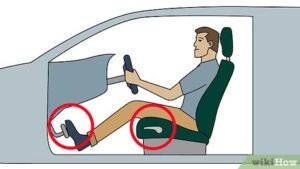
Adjust Your Seat
Make sure you can comfortably reach the pedals and steering wheel. Your knees should be
slightly bent.
Adjust Mirrors
Ensure you have a clear view of the road behind and beside you.
Fasten Your Seatbelt
This is non-negotiable. Safety always comes first.
Check Surroundings
Look around your car for any obstacles or pedestrians.
4. Starting the Car
For Automatic Cars:
Insert the key or press the start button.
Ensure the gear is in “P” (Park).
Press the brake pedal.
Start the engine.
For Manual Cars:
Press the clutch fully.
Put the gear in neutral.
Start the engine.
5. Moving the Car
In Automatic Cars:
Press the brake pedal.
Shift gear to “D” (Drive).
Slowly release the brake.
Gently press the accelerator.
In Manual Cars:
Press the clutch fully.
Shift to first gear.
Slowly release the clutch while gently pressing the accelerator.
Once the car starts moving, release the clutch fully.
This step requires practice, especially in manual cars where balancing clutch and accelerator is
crucial.
6. Steering and Control
Steering is all about smooth and controlled movements. Avoid sudden turns or jerks. Keep both
hands on the steering wheel—ideally in the “9 and 3 o’clock” position.
Always:
Turn the wheel gradually
Return it smoothly after turning
Stay within your lane
7. Using Brakes Properly
Braking is one of the most important skills in driving. Press the brake pedal gently to slow down.
Sudden braking can cause discomfort and accidents.
Tips:How to Drive a Car: A Complete Beginner’s Guide
Maintain a safe distance from the vehicle ahead
Anticipate stops (traffic lights, signals)
Use gradual braking instead of sudden stops
8. Changing Gears (Manual Cars)
In manual cars, changing gears is essential for smooth driving:
1st Gear – Start moving
2nd Gear – Slow speed
3rd Gear – Moderate speed
4th/5th Gear – High speed
Always press the clutch fully before changing gears and release it slowly afterward.
9. Understanding Road Rules
Driving is not just about controlling the car—it’s also about following traffic rules:
Obey traffic signals
Follow speed limits
Use indicators while turning
Respect pedestrians
Avoid using mobile phones while driving
Following rules ensures safety for you and others on the road.
10. Parking the Car
Parking is a skill that improves with practice.
Types of Parking:
Parallel Parking
Perpendicular Parking
Angle Parking
Basic steps:
Slow down and position your car correctly
Use mirrors and reverse camera (if available)
Turn the steering slowly
Adjust the position as needed
Take your time—parking should be done carefully, not quickly.
11. Driving in Traffic
Driving in busy areas can be challenging. Here are some tips:
Stay calm and patient
Keep a safe distance from other vehicles
Avoid aggressive driving
Use mirrors frequently
Be alert at all times
With experience, traffic driving becomes easier.
12. Common Mistakes Beginners Make
Avoid these common mistakes:
Pressing accelerator too hard
Releasing clutch too quickly (manual cars)
Not checking mirrors
Ignoring traffic rules
Panic braking
Learning from mistakes is part of the process, but awareness helps you improve faster.
13. Safety Tips for How to Drive a Car: A Complete Beginner’s Guide New Drivers
Always wear a seatbelt
Avoid distractions (phone, loud music)
Drive at a comfortable speed
Keep both hands on the wheel
Practice regularly
Safety should always be your top priority.
14. Practice Makes Perfect
Driving is a skill that improves with time and practice. Start in an empty parking lot or quiet road
before moving to busy streets. Gradually increase your confidence and exposure.
You can also:
Take professional driving lessons
Practice with an experienced driver
Watch tutorials for better understanding
Conclusion:How to Drive a Car: Best Tips for Beginner’s
Learning how to drive a car may seem difficult at first, but with the right approach and consistent
practice, it becomes second nature. Start by understanding the basics, practice regularly, and
always prioritize safety. Whether you choose a manual or automatic car, the key is patience and
confidence.
Driving is not just about reaching your destination—it’s about enjoying the journey while
ensuring safety for yourself and others.
FAQ:How to Drive a Car
How to Drive a Manual Car?
- The manual transmission car is where you have to use all your senses and remain totally focused while driving. Let us give you a few pointers on how to do so:-
- The engine should be powered on when the gear is in neutra. In modern day cars it is essential to engage the clutch while starting the engine. This avoids a sudden jerk if the vehicle is not in neutral. The gear knob is numbered from 1-4 or 5 with R standing for reverse.
- Drivers then disengage the handbrakes while putting the vehicle in first gear to set the vehicle in motion. They control the clutch with their left foot; the accelerator with the right one. Proper coordination between the hand and gear knob, the foot and the pedal is essential to have a smooth and comfortable drive.
- To increase the speed of the vehicle the gears are changed appropriately while depressing and releasing the clutch. When the speed needs to be reduced we press down on the brakes while following the same process in reverse.
- To stop the vehicle we use the brakes while engaging the clutch. This ensures that the vehicle does not stall. The gear can then be brought back to the neutral position or re-engaged to the right one as per the circumstances.
- Reversing a vehicle should be carefully done while looking around for any obstructions in the parking place utilising the side and rear view mirrors for the same. When parking, use the hand brake to keep the vehicle from moving. Turn off the ignition.
How to Drive an Automatic car?
- You might find that driving an automatic car is comparatively hassle-free, but nonetheless focus should be maintained at all times. The list below should help you out.
- The automatic car starts while one foot is pressed on the brake and Ignition is turned on.
- One must then shift the gear lever into the drive mode while lifting the foot from the brakes so that the vehicle begins to move.
- Automatic cars usually have P,R,N,S & D letters denoting Parking, Reverse, Neutral, Sport and Drive. Some automatics usually have M for manual as well, with + and – to switch between gears.
- The headache of changing gears is avoided and the accelerator is used to control the speed of the vehicle.
- To bring the vehicle to a complete stop; disengage the accelerator and then engage the brake to stop the vehicle.
- The vehicle can be reversed by pushing the lever into R position. Once the manoeuvre is complete, the lever is moved to P if you are going to park. If you have reversed to change direction you move the lever to D if you are driving on.
- If you need to park, put the gear in the parking position, apply the parking brake,and turn off the ignition.
If you wish to get more details on how to drive an automatic car, it’s no surprise we’ve got you covered.
Tips to Remember While Driving a Car in Traffic Positve and Negative impact
- Be alert and focused on your driving.
- Usage of clutch should be at a minimum due to its wear and tear. It should be disengaged immediately on changing gears and when the vehicle is in neutral.
- Stay in your lane. Do not switch.
- Avoid unnecessary honking and follow traffic rules.
- Appropriate light or hand signals to be used.
- Always glance at the side and rear view mirrors while overtaking, and also to look out for other vehicles on either side of your car.
- Keep the vehicle within the speed limit.
- Map out the route to be taken prior to starting for your destination or use proper GPS coordinates.
- Do not follow the car in front of you too closely.
- Avoid braking suddenly as the vehicle behind might telescope into yours.